12 Key Reasons Why Online Education is Better Than Traditional Ones!

Discover why online education is transforming the learning landscape and how it offers unique advantages over traditional classroom settings for international students.
For decades, the traditional classroom was the only path to a quality education. That is no longer true. As internet bandwidth, video tooling and pedagogical software have caught up, the constraints that made the physical classroom indispensable — geography, fixed schedules, scarce specialist teachers — have started to dissolve. Online education, when done right, now consistently outperforms its traditional counterpart on the metrics that actually matter: outcomes, individualization and access.
At IGB Geniuses, we have watched students from Malaysia, the UAE, the UK, Pakistan and Portugal achieve grades that would have been out of reach in their local school setting. Below are twelve concrete reasons why.
1. Genuinely individualized pacing
A class of thirty cannot move at thirty speeds. A 1-to-1 online lesson can. Students who grasp a concept quickly skip ahead; students who need a second pass through quadratic identities or organic-chemistry mechanisms get one without slowing anyone else down.
2. Access to subject-specialist tutors anywhere on Earth
A student in a Malaysian international school can be taught Further Mathematics by a PhD-trained specialist in Portugal. The same specialist would simply not be hire-able full-time in most cities — but two evenings a week is trivial when the commute is a Zoom link.
3. Recordings turn lessons into a study resource
Every lesson can be recorded. The night before an exam, students do not have to remember what was said in class — they can re-watch the exact thirty seconds that explained mole-ratio stoichiometry the first time round.
4. Real-time digital working with iPad + Apple Pencil
On our platform, students write their working on an iPad while the tutor watches live on a second screen. Mistakes get corrected at the moment they appear, not three days later when the marked book comes back.
5. Powerful simulators for STEM
PhET, GeoGebra, Desmos, LabVIEW emulators — these tools turn abstract physics and maths into something a learner can manipulate with a cursor. Online lessons fold them in naturally; physical classrooms rarely have the device-per-student ratio to do the same.
6. Data on every dimension of progress
Our learning platform tracks average score, lessons completed, time on task, completion rate, topic-wise performance and homework returns. Parents see this dashboard. Tutors plan against it. Nothing about a struggle is invisible.
7. Time saved on commuting
Two extra hours a week, every week, for a teenager preparing for IGCSE or IB. That is roughly 100 additional hours of study or sleep across an academic year — at the exact age when both pay dividends.
8. Flexible scheduling around extracurriculars
Music, sport, family travel, religious observance — online lessons rebook in minutes, not weeks. Continuity through a busy schedule is one of the strongest predictors of exam performance, and online tutoring respects that.
9. Calmer learning environment
For students who find a noisy classroom over-stimulating — a population larger than schools usually admit — a focused 1-to-1 video session is markedly easier to sustain attention through.
10. Stronger feedback loops with parents
Parents see the platform. Parents see the recordings. Tutors and parents talk in regular PTMs. Compare with the once-a-term parent evening that traditional schools manage.
11. Up-to-date curricula
Specification changes — new IBDP guides, new Edexcel exam structure — propagate to a digital platform overnight. Print resources in physical schools can lag by a year or two.
12. It scales with the student, not against them
When a learner moves country, changes curriculum or accelerates a year, the same tutor can keep going. Continuity of teacher across a multi-year qualification is one of the rarest and most powerful things online education offers.
“Online education is not a downgrade of the classroom. For motivated international students, it is becoming the default — and the classroom is the alternative.”
None of this means traditional schools have no place. They remain important for socialization, sport, and the rhythms of daily life. But for the academic core — the part that determines university admissions and career paths — a well-run online program is now demonstrably the stronger option.
More articles
View all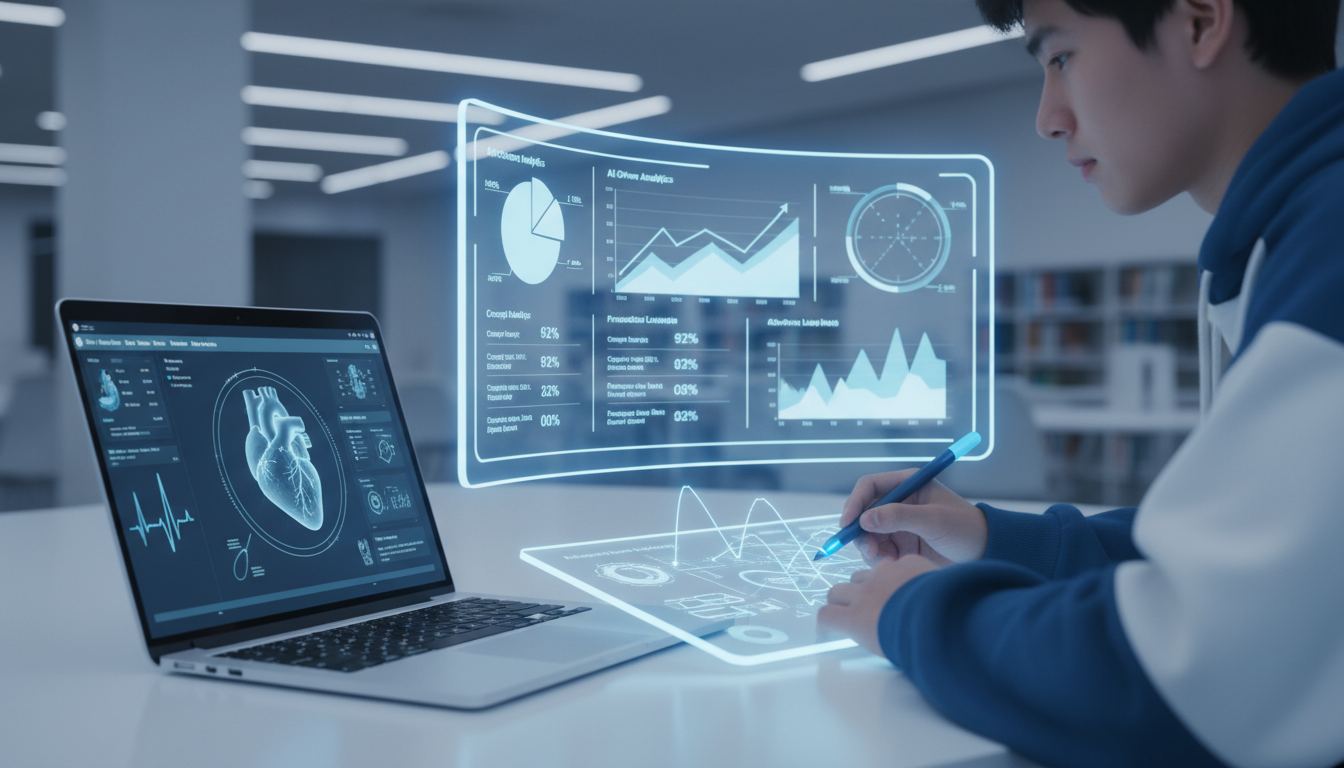
How Quantum Computing Can Enhance AI Abilities?
Quantum computing, an emerging field at the intersection of computer science and quantum physics, promises to revolutionize the capabilities of artificial intelligence.

Proven Business Practices for Modern Enterprises
Explore the key business strategies and practices that modern enterprises are adopting to stay competitive in today's fast-paced global market.
7 Inspiring Stories of Random Acts of Kindness
Read about heartwarming stories of people who made a difference through simple acts of kindness, and how these moments inspire others to do the same.